Reduced WordPress Downtime 96%
Challenge
Plugin and PHP conflicts made Trinity’s WordPress site unstable, slow, less accessible, and increasingly difficult to keep reliably available.
Approach
SHERPA migrated Trinity to Statamic, removing plugin dependencies and simplifying the architecture while preserving the existing user experience.
Results
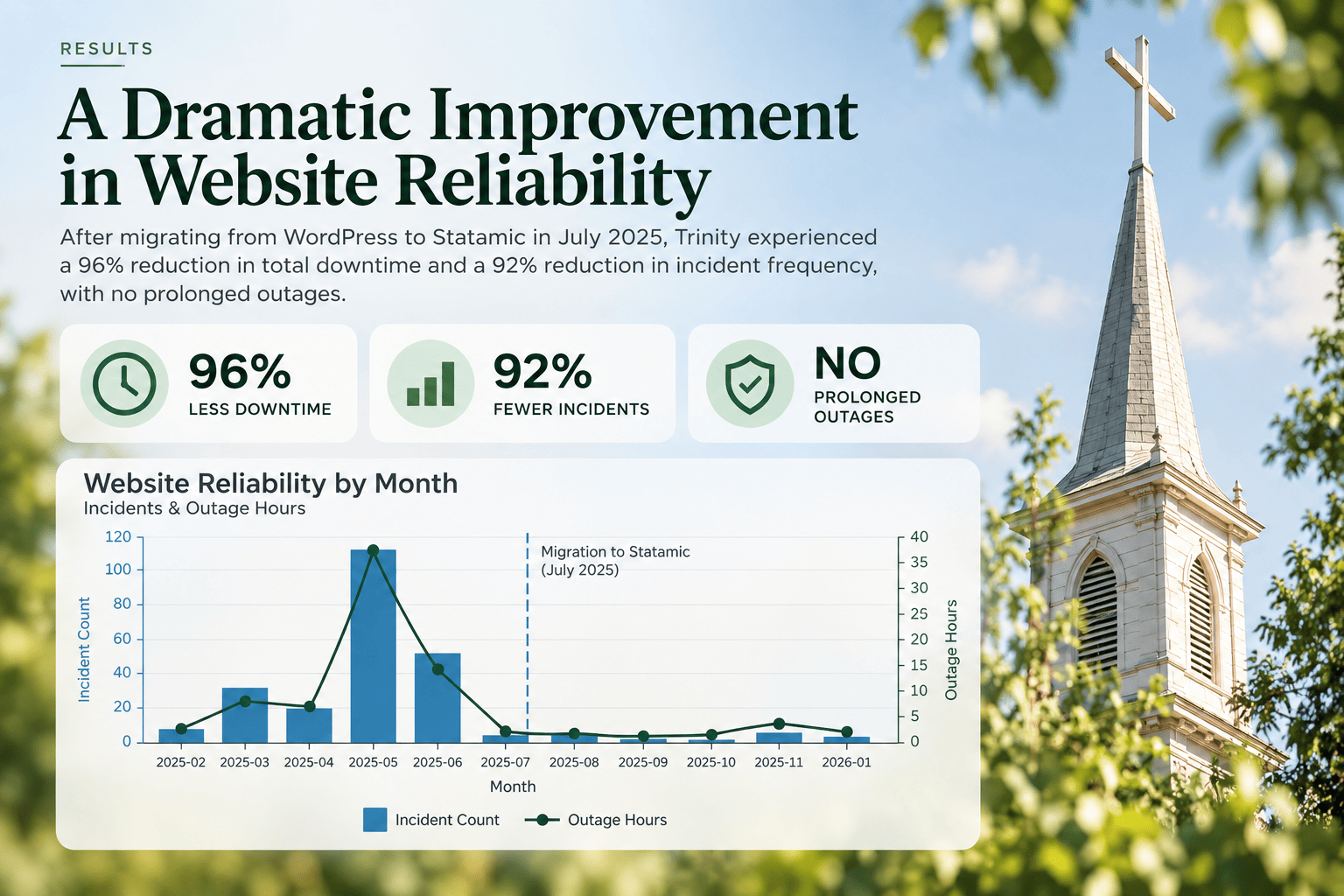
Downtime fell 96%, incidents fell 92%, prolonged outages disappeared, and Trinity gained a faster, more accessible, dependable platform.

We replatformed Trinity Presbyterian Church from WordPress to Statamic after persistent outages, plugin conflicts, slow performance, and accessibility concerns. The migration removed the architectural causes of instability, dramatically improving reliability while creating a faster, more accessible foundation for the church’s digital presence.
SERVICES
Custom CMS / Statamic CMS / WordPress Maintenance / Performance
Challenge
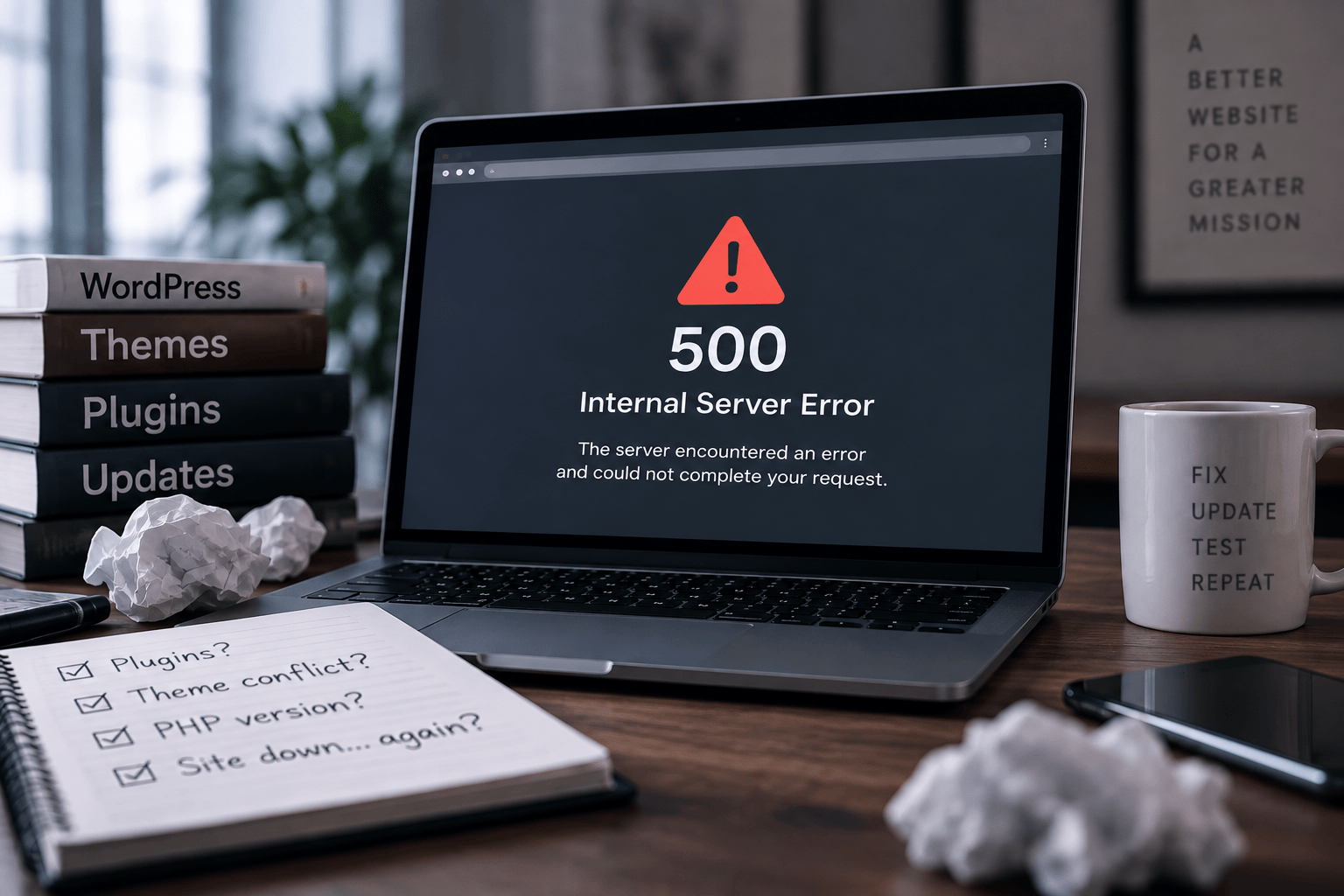
TrinityAtlanta.com had become increasingly fragile as WordPress core, its theme, PHP, and numerous third-party plugins evolved independently.
Updates intended to improve one part of the site could introduce incompatibilities elsewhere. Over time, Trinity experienced connection timeouts, 500-level server errors, recurring incidents, and several multi-hour outages.
The site also faced speed and accessibility concerns. Instead of investing resources in improving the digital experience, increasing effort was going toward maintaining compatibility and responding to incidents.
For a church whose website serves congregants, visitors, staff, families, and the broader community, that instability had become an operational risk.
Approach
Rather than continuing to troubleshoot individual WordPress failures, SHERPA recommended removing their underlying architectural causes.
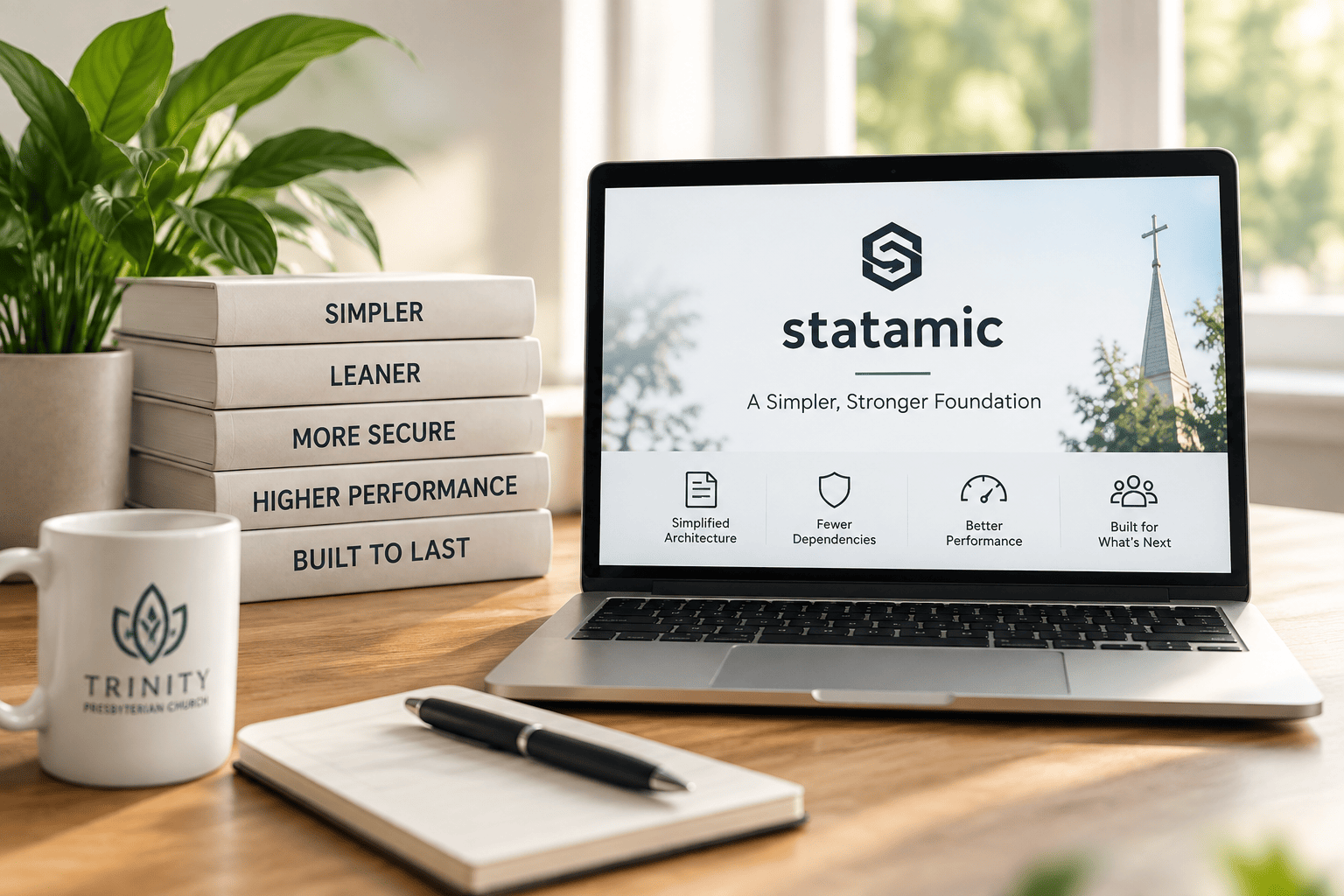
In July 2025, we migrated TrinityAtlanta.com from WordPress to Statamic. The replatform:
eliminated the plugin-dependent WordPress architecture;
substantially reduced the number of moving parts and potential failure points;
simplified hosting and deployment;
preserved Trinity’s existing content and visitor experience; and
provided a cleaner foundation for performance and accessibility.
The objective was not simply to make the next outage less likely. It was to change the architecture so the same class of failures would no longer exist.
Results
The difference after migration was significant. Trinity moved from an incident-prone WordPress environment requiring continual compatibility management to a substantially more stable platform with fewer dependencies and fewer opportunities for failure.
Under WordPress, Trinity experienced recurring outages across multiple months, including several prolonged incidents associated with plugin, PHP, and application conflicts. Following the move to Statamic:
Total downtime decreased 96%. Incident frequency decreased 92%. Prolonged outages were eliminated entirely.
The remaining incidents have been rare, brief, and isolated rather than systemic failures capable of taking the website offline for hours.
The simpler architecture also addressed the performance and accessibility concerns associated with the previous site and provides a more controlled foundation for maintaining both over time.
The larger result is predictability.
OUR CLIENTS SAY THAT WE R.O.C.K
Thank you for contacting us!
We appreciate you sharing with us what you are trying to achieve. We will contact once we review your information. In the meantime, we sent you a copy of your submission to your inbox.
Ooops, captcha error!
Ooops, something went wrong!
Please try again, if you still are having trouble contact us directly at webmaster@sherpaglobal.com.
How Can We Help You?
Can't find what you need?
Call us at (404) 369-0219.
Can't find what you need?
Call us at (404) 369-0219.